Office building amenities have become a major factor in commercial real estate decisions. Beyond rent and location, today’s businesses are evaluating how workplace amenities influence employee recruitment, retention, productivity, and overall company culture. Choosing the right office environment can strengthen your workforce while supporting long-term business growth.
In a competitive hiring market and an evolving workplace landscape, companies are rethinking not just their office layout—but also the amenities that surround it. If you’re considering an office space search, today’s market presents a rare opportunity in some markets such as Stamford and Norwalk, CT: high vacancy rates and furnished sublease space make it possible to upgrade to buildings with robust amenity packages without ballooning your budget. From large indoor and outdoor gathering areas to on-site conference facilities, fitness centers, child day care, concierge services, train shuttles, covered parking, storage rooms, and even boat slips, amenity-rich office complexes can transform both the employee experience and your operational efficiency.
This post explores the direct and indirect costs of building amenities, how to negotiate value in today’s leasing environment, and how to align amenity choices with your business objectives—especially important for hybrid and in-office teams.
Why Office Building Amenities Matter More Than Ever
Amenities have evolved from “nice-to-have” perks to strategic tools that influence talent attraction, retention, productivity, and brand perception. In an era where employees compare their workplace experience to home office convenience, the right amenities can tip the scale toward higher engagement and stronger in-office attendance.
- Talent Attraction & Retention: Offerings like on-site fitness, childcare, and commuting support (shuttles to train) directly address employee pain points and signal a people-first culture.
- Productivity & Collaboration: Access to large, well-furnished common areas and reservable conference rooms encourages planned collaboration and spontaneous teamwork without your company carrying the cost of building and maintaining those spaces internally.
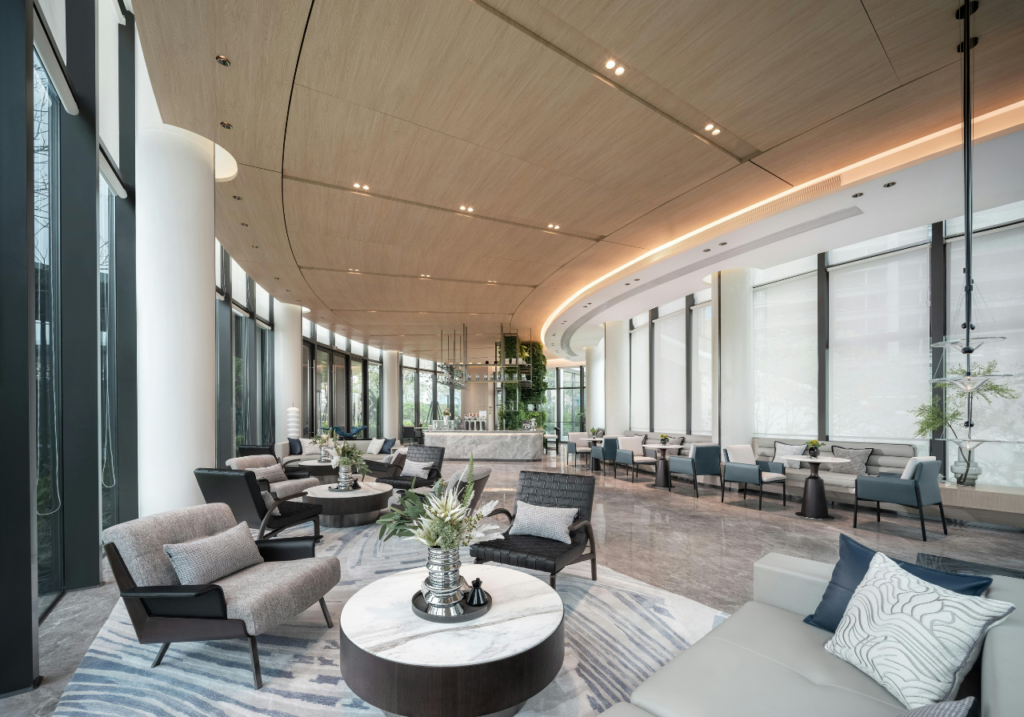
- Brand & Client Experience: An elevated lobby, concierge services, and professional meeting facilities enhance your company’s presence and client-facing interactions.
Direct Costs: What You’ll Actually Pay
Amenity costs typically come in a few formats: included in base rent or charged as usage fees. Understanding each is essential to calculate total occupancy cost and compare buildings apples-to-apples.
Conference Rooms (Shared Building Facilities)
Most Class A buildings offer well-equipped conference rooms that tenants can book by the hour or day.
- Typical Cost: Often limited to a nominal service charge for cleaning and setup.
- Savings: Significant compared to hotel conference facilities, where rooms, audiovisual packages, and catering minimums can add up quickly.
- Best Use Case: Client presentations and confidential meetings with employees or perspective employees, especially when you don’t need to build your own large conference suite.
Fitness Centers (On-Site Gyms)
- Typical Cost: Varies per month for tenant memberships.
- Savings: Considerably less than area health clubs, which can run $60–$150+ per month, especially when you factor in convenience and time saved commuting to a gym.
Shuttle or Uber Service to Train Stations
- Typical Cost: Often free to tenants in commuter-focused office parks or urban campuses.
- Savings: Reduces parking demand, streamlines commuting, and broadens your recruiting radius by making public transit more viable.
Storage Space
- Typical Cost: Ranges from free (negotiated concession) to a modest monthly fee depending on size and security requirements.
- Savings: Can offset offsite storage costs and cut retrieval time for frequently used materials or event gear.
Parking (Covered, Reserved, EV)
- Typical Cost: Free for the majority of buildings in Fairfield and Westchester Counties.
- Savings/Value: Reserved employee and visitor spots improve executive schedules and client experience; covered parking protects employees and assets, especially in extreme weather.
Day Care and Specialty Amenities
- Typical Cost: Daycare will be fee-based and provided by a third party operator, but can offer priority or discounted tenant rates. Specialty amenities (like boat slips) are location-specific and often limited.
- Value: Concierge can streamline deliveries, guest check-ins, and provide building security. On-site daycare is a major differentiator for family-minded professionals.

Indirect Costs: What’s Not on the Price Tag (but Matters)
1) Utilization & Policy Management
Amenity value depends on active utilization. If you subsidize gym memberships or offer daycare discounts, ensure policies are communicated, equitable, and easy to use (simple sign-up, clear booking rules).
2) Scheduling & Operations
Landlords offer a centralized booking (for conference rooms and storage), manage reservations and establish norms for cleaning, IT/AV setup, and catering.
3) Space Efficiency Trade-offs
Leveraging building conference rooms and gathering spaces can allow smaller private footprints—saving rent. If your team depends on frequent large meetings, ensure capacity matches demand to avoid offsite costs.
4) Culture & Engagement
Amenities work best when integrated into your culture. Fitness centers, lunch-and-learns in shared spaces, shuttle schedules aligned with core hours—these amplify benefit and impact morale.
Negotiation Opportunities in Today’s Market
In the current leasing environment, amenity costs are often negotiable. High vacancy rates in some markets such as Stamford and Norwalk give tenants leverage to secure concessions that either reduce costs or enhance employee experience—sometimes both.
Commonly Negotiated Wins:
- Free Storage Space: Either a defined square footage or a set number of cages/lockers.
- Free Conference Room Hours: A monthly or quarterly allotment included in the lease.
- Free Fitness Center Memberships: A pre-set number of memberships covered by the landlord.
- Shuttle & Uber Access: Typically free; ensure service frequency and route suit your team’s commute patterns.
- Parking Concessions: Discounted reserved spots, bundled EV charging, or guest parking vouchers.
Negotiation Tips:
- Benchmark Across Buildings: Compare amenity packages and actual usage fees line by line.
- Ask for Time-Bound Concessions: Free memberships or hours for the first year or two can help ramp adoption.
- Tie Amenities to Attendance Goals: Position requests (e.g., gym passes, shuttle upgrades) as supports for hybrid return-to-office targets.
- Document Everything in the Lease: Ensure amenity access, booking priority, hours, and service levels are written.
Cost Comparison: Illustrative Scenarios
Scenario A: Conference Rooms
- Hotel Venue: $600–$2,000 per day + AV + catering minimums + service fees.
- Building Conference Room: $0–$250 per booking (cleaning/service).
- Outcome: Savings multiply across quarterly board meetings and client off-sites; reduced logistical complexity.
Scenario B: Fitness Access
- Local Health Club: $75/month x 50 employees = $3,750/month.
- Building Gym: $35/month x 50 employees = $1,750/month.
- Outcome: ~$2,000/month savings, plus time efficiency and improved usage due to convenience.
Scenario C: Shuttle & Parking
- No Shuttle: Higher demand for paid parking, lower transit adoption.
- Free Shuttle: Improved recruiting radius, lower parking costs, enhanced punctuality.
- Outcome: Indirect savings and stronger employee satisfaction.
(Numbers are illustrative; actual costs vary by market and landlord.)
Align Amenities with Your Workplace Strategy
Hybrid Work:
- Prioritize amenities that encourage intentional in-office days: reservable conference rooms, collaboration lounges, strong Wi-Fi and AV, fitness classes aligned with core hours, and shuttle schedules that match team arrival/departure windows.
Client-Facing Teams:
- Focus on lobby experience, concierge services, nearby hospitality, and access to professional meeting spaces with reliable AV, privacy, and catering options.
Family-Friendly Policies:
- On-site or nearby daycare partnerships, lactation rooms, flexible schedules supported by shuttle services, and safe, covered parking.
Brand & Culture:
- Outdoor terraces and indoor commons for events, employee clubs (wellness, book club), and programming that uses the building’s spaces thoughtfully.
Due Diligence Checklist: Before You Sign
- Amenity Inventory: List available amenities and whether they’re included, fee-based, or negotiable.
- Booking Rules: Hours of operation, priority for tenants, usage limits, cancellation policies, cleaning fees.
- Capacity & Quality: Size of conference rooms, AV reliability, soundproofing, Wi-Fi speed, furniture quality.
- Security & Access: Badge systems, guest management, surveillance, after-hours access.
- Liability & Insurance: Requirements for fitness center, events, and storage of materials.
- Parking Terms: Number of reserved spaces, EV charging policies, guest passes, rates for covered vs. uncovered.
- Shuttle Logistics: Frequency, route, ridership capacity, seasonal adjustments, ADA compliance.
- Landlord Service Standards: Response times, concierge coverage, maintenance SLAs, janitorial quality.
- Concessions & Credits: Spell out free hours/memberships, storage allowances, and renewal incentives in the lease.
- Scalability: Can amenity access scale as your headcount grows?
Making the Business Case: ROI Beyond Rent
When evaluating buildings, consider the full value stack:
- Hard Savings: Reduced hotel/venue spend, lower gym membership rates, storage cost offsets, shuttle-related parking savings.
- Soft Benefits: Increased attendance on key days, improved morale, better recruiting reach, stronger client impressions.
- Risk Mitigation: Professionalized facilities with compliant AV, security, and cleaning standards can reduce operational headaches and liability.
- Space Optimization: Relying on shared building amenities may let you take a more efficient footprint—saving on base rent and build-out.
Final Thoughts
In today’s office leasing environment, amenity-rich buildings can create a more vibrant, efficient, and attractive workplace—and many of the costs are either modest or negotiable. The key is to align amenity choices with your executive team’s vision, quantify direct and indirect costs, and leverage market conditions to secure terms that elevate both employee experience and your bottom line.
If you’re exploring options across Fairfield and Westchester Counties—or nationally through a portfolio strategy—now is a strong moment to benchmark amenity packages and lock in value while vacancy remains high and landlords are motivated. The right amenities don’t just decorate your office—they power your culture, productivity, and brand.