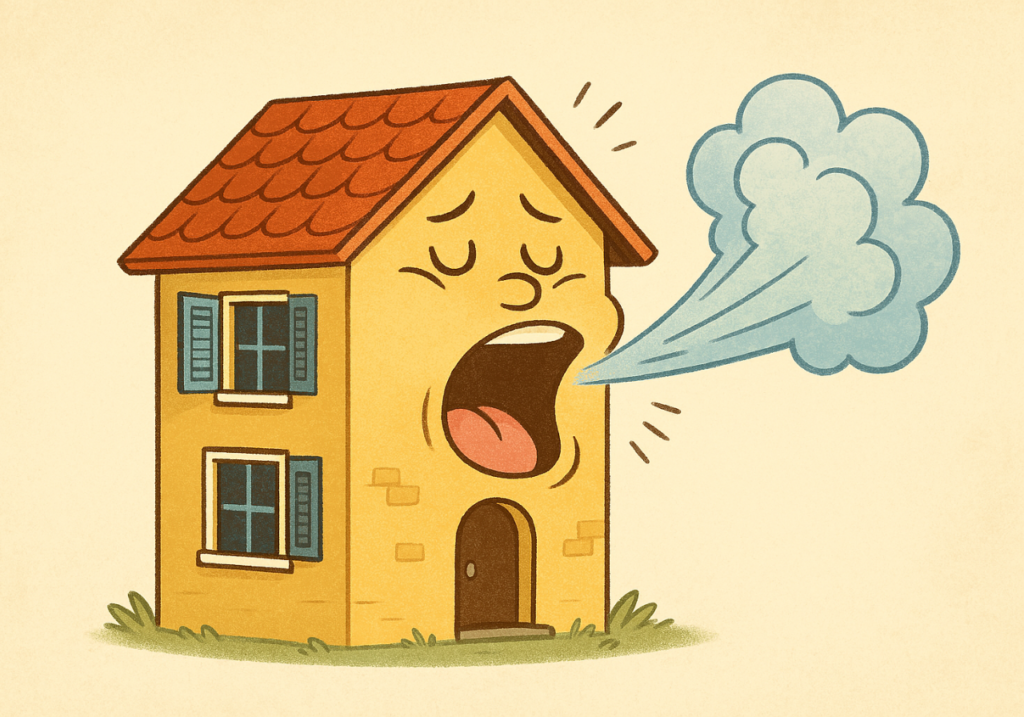
- House Burping — this trend of opening windows daily is blowing up online.
- It’s based on the longstanding German practice of lüften, or regularly airing out your home.
- Fresh air actually does improve indoor air quality, reduce pollutants, and may help curb mold.
If you’ve scrolled Instagram or TikTok lately, you may have stumbled across a strange trend: people “burping” their houses. No, it’s not as weird as it sounds. “House burping” is the American nickname for lüften, a long‑standing German habit of airing out your home once or twice a day—rain, snow, or shine.
And now? It’s trending everywhere.
So… what is house burping?
At its core, it’s simple: you open your windows for a few minutes to let stale indoor air escape and fresh outdoor air flow in. That’s it. Some people do it in the morning. Some do it before bed. Some set timers. Online creators are even making ASMR‑style window‑opening videos (because of course they are).
Despite the quirky name, the concept actually has deep roots. In Germany, lüften is such a normal part of life that many landlords build it into lease agreements. Daily ventilation is considered essential for keeping humidity down, reducing stuffy indoor air, and preventing mold.
Why are Americans suddenly obsessed with it?
A lot of factors converged:
- The growing focus on indoor air quality
- More awareness of airborne pollutants
- Post‑pandemic interest in ventilation
- Social media turning everyday habits into soothing rituals
Plus, let’s be honest: “Time to burp the house!” is exactly the kind of slightly silly phrase the internet loves.
But… does it actually work?
Surprisingly (or maybe not), yes.
Fresh air circulation helps reduce the concentration of indoor pollutants known as volatile organic compounds (VOCs)—the invisible chemicals released from furniture, mattresses, cleaning supplies, paints, beauty products, and more. These can trigger headaches, itchy eyes, fatigue, or breathing irritation in some people.
Ventilation also helps regulate humidity. Since excess moisture is a major factor in household mold growth, even a few minutes of open windows can make a difference.
Researchers and public health experts widely agree: letting in fresh outdoor air is one of the easiest, cheapest ways to improve indoor air quality. Many homes in the U.S. are sealed tightly for heating and cooling efficiency, which traps everything inside—good, bad, and otherwise. House burping interrupts that cycle.
Do you have to freeze your living room in winter?
Nope. Even in the colder months, a few minutes of cross‑ventilation (opening windows or doors on opposite sides of your home) is often enough to swap out the stale air without dramatically changing your indoor temperature. Germans even have a word for that brisk winter blast: stoßlüften, or “shock airing.”
Think of it as a quick reset for your indoor environment.
Is it worth trying?
If you’re looking for an easy way to make your home feel fresher—and potentially reduce allergens, humidity, and chemical buildup—house burping is a low‑effort experiment.
A few minutes a day. A slight chill. A whole lot of fresher air.