While Stamford continues to lead Connecticut in overall residential development activity, neighboring Wilton is now generating attention for a different reason. The Wilton CT housing market is expanding rapidly as the town adds housing at a faster rate per capita than any other municipality in the state. Recent development data shows Wilton’s residential pipeline outpacing larger communities when measured against population, underscoring a broader trend reshaping Lower Fairfield County and highlighting the growing demand for housing in suburban Fairfield County communities.
For commercial real estate professionals, the story extends well beyond housing. Across Fairfield County, many of the region’s largest residential developments are being concentrated along established commercial corridors, downtown districts, and transit-accessible locations. This pattern is creating new opportunities for mixed-use development, retail activation, and office repositioning.
In both Wilton and Fairfield, development has been centered largely to date on major commercial corridors and downtown areas with access to commuter rail service or bus transportation. These locations already possess the infrastructure, amenities, and connectivity needed to support additional density while encouraging walkability and reducing automobile dependence.
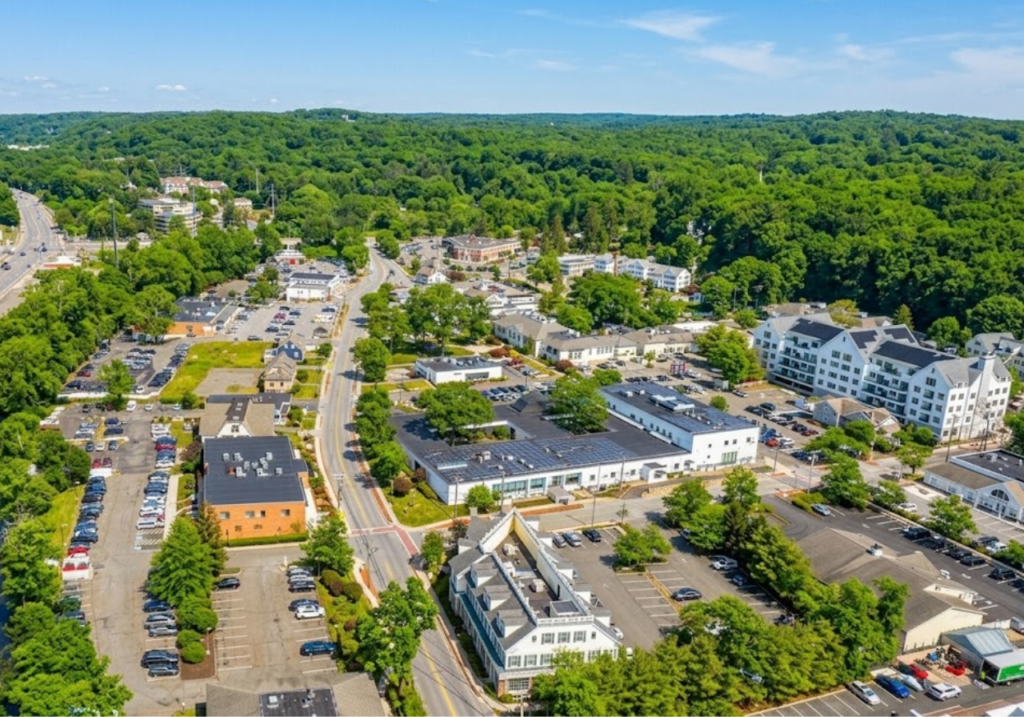
Wilton’s ongoing growth is particularly evident along the Route 7 corridor, where numerous multifamily projects have been completed, approved, or proposed. By early 2027, the town could see more than 1,200 new residential units added to its housing inventory, a dramatic increase for a community of its size and a significant milestone for Wilton CT housing development.
Meanwhile, Stamford remains by far the largest generator of residential development in Connecticut. For more than a decade, the city has served as the state’s primary center for apartment construction, fueled by its transportation network, employment base, and proximity to New York City. Even as other Fairfield County communities accelerate development activity, Stamford continues to set the pace in terms of total housing production.
The growth occurring in Stamford, Wilton, Fairfield, Norwalk, and other Lower Fairfield County communities reflects a larger evolution in how municipalities are approaching land use planning. Increasingly, housing is being directed toward commercial districts and transit-oriented locations where residents can live closer to employment centers, shopping, dining, and public transportation.
For commercial property owners and investors, these demographic shifts can have meaningful implications. Additional residential density often creates stronger demand for neighborhood-serving retail, restaurants, healthcare providers, fitness operators, and other service-oriented businesses. At the same time, mixed-use environments continue to attract companies seeking locations that offer employees a live-work-play experience.
“Throughout Fairfield County, we’re seeing a growing recognition that housing and commercial real estate are interconnected,” said John Hannigan, Principal at Choyce Peterson. “When new residential development is strategically located near transit and established business districts, it can strengthen local economies, support retailers, and help create more vibrant commercial environments.”
Hannigan also noted that communities balancing residential growth with economic development objectives may be better positioned for long-term success.
“The most successful development patterns are those that leverage existing infrastructure and reinforce established commercial centers,” Hannigan said. “As Fairfield County continues to evolve, we expect transit-oriented and mixed-use development to remain a significant factor influencing both residential and commercial real estate markets.”
As municipalities across Fairfield County continue evaluating housing needs and economic development goals, the growth occurring in Wilton serves as a notable example of how residential development is increasingly shaping the future of the region’s commercial corridors. The trend highlights the growing importance of integrated planning strategies that support housing creation while strengthening business districts and transportation networks throughout the county.
Note: Some background information in this article was reported by The Stamford Advocate.
Explore additional Wilton building guides, recent transactions, client success stories, and local market insights on our Wilton Commercial Real Estate page.