Plan ahead. Understand your options.
Get the information you need to make a confident, well-timed office lease decision.
Office Lease Planning Resources
Office lease planning gives your business time to understand its options before deadlines narrow the choices. Whether your office is in Fairfield County, CT, or Westchester County, NY, starting early allows you to assess your current space, explore market alternatives, and compare renewal and relocation costs—even if you would prefer to stay.
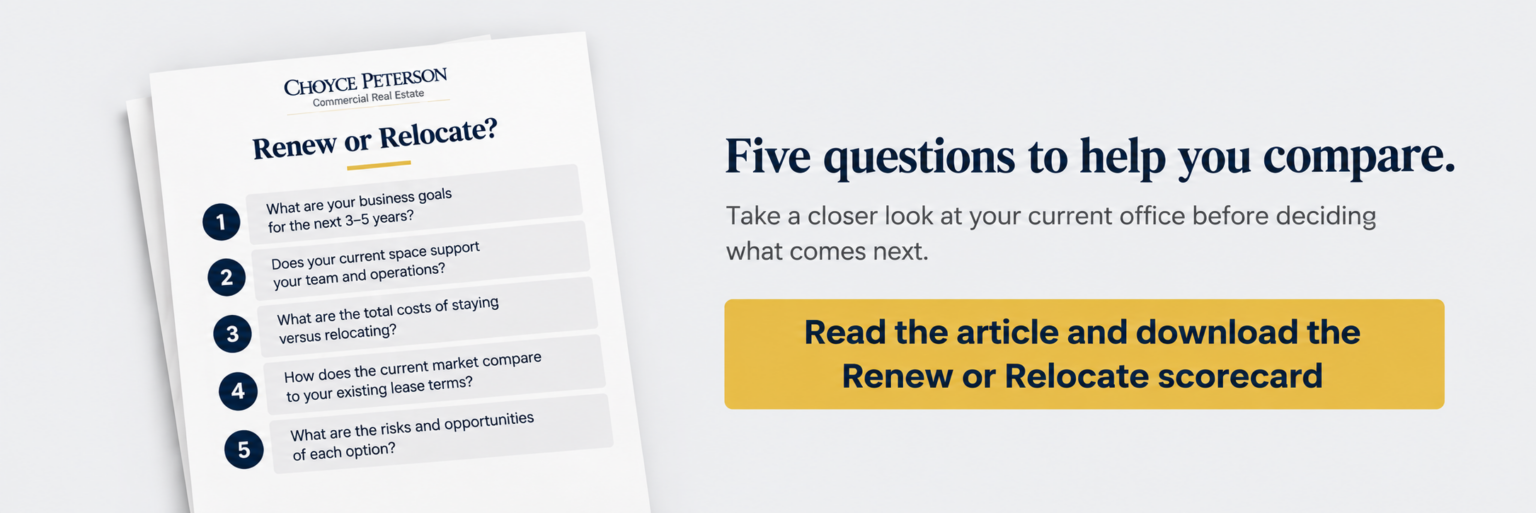
Explore the articles, practical guidance, and free planning tools below to help you prepare for your next office lease decision.



How Tenant Representation Supports Office Lease Planning
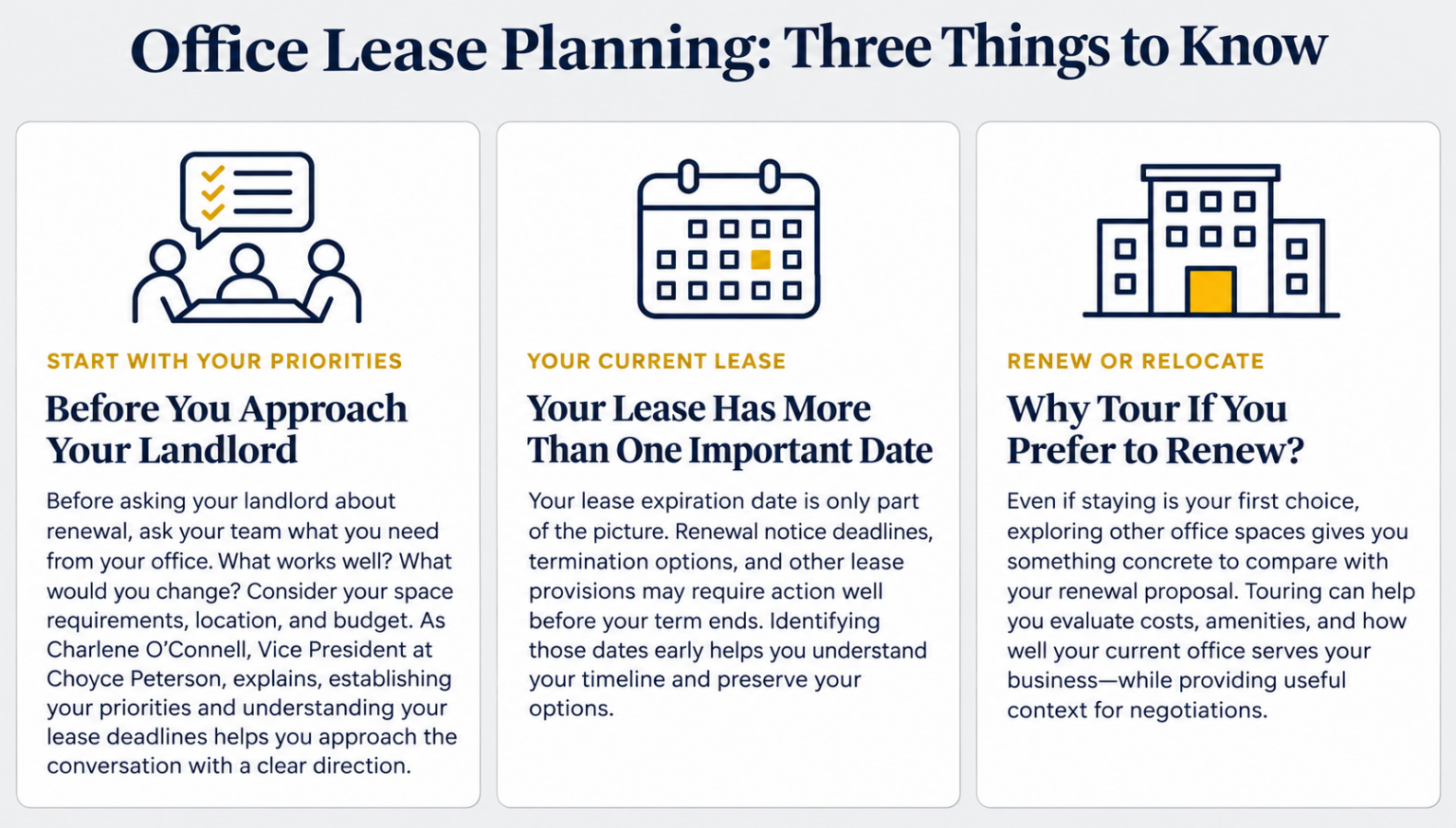
Office lease planning starts with understanding how your space supports your business—and what you may need from your next lease. For companies in Fairfield County, CT, and Westchester County, NY, Choyce Peterson helps evaluate renewal, relocation, and expansion options in the context of business goals, budget, and market conditions.
A useful comparison goes beyond the advertised rental rate. Operating expenses, real estate taxes, electricity charges, construction responsibilities, and available concessions can affect the overall cost. Building systems, parking, access, and space efficiency also deserve attention when assessing whether an office will serve your team.
Planning also means considering how your needs could change. Renewal options, expansion rights, and sublease and assignment provisions can influence your flexibility throughout the lease term. Understanding these terms before committing helps you weigh immediate needs alongside future possibilities.
Even if you prefer to renew, knowing the alternatives provides a stronger basis for evaluating your landlord’s proposal. Choyce Peterson brings market knowledge, property analysis, and negotiation experience to the process, coordinating with your team and other advisors to help you make an informed decision.
Office Lease Planning: Look Beyond the Rental Rate
When comparing a renewal with a potential move, the quoted rent tells only part of the story. Operating expenses, real estate taxes, electricity charges, and annual increases can affect what your business pays throughout the lease. Free rent, improvement allowances, and the cost of preparing a space also belong in the comparison.
The space itself matters, too. An office with a lower rental rate may require more square footage to accommodate your team, while a more efficient layout could meet your needs in less space. Parking, building access, and the condition of building systems can also influence whether an option makes practical sense.
Evaluating these factors together gives your business a clearer basis for its next decision. The goal is to understand the overall cost and suitability of each option before committing to another lease term.
Will Your Next Lease Leave Room for Change?
Your office needs may change before your next lease ends. Growth, a merger, or changes in how your team works could affect the amount or type of space you need. Office lease planning should consider those possibilities alongside your immediate requirements.
Expansion rights, renewal options, and sublease and assignment provisions can influence your ability to respond. Reviewing these terms during negotiations helps your business understand what flexibility may be available, what restrictions apply, and which options deserve priority.