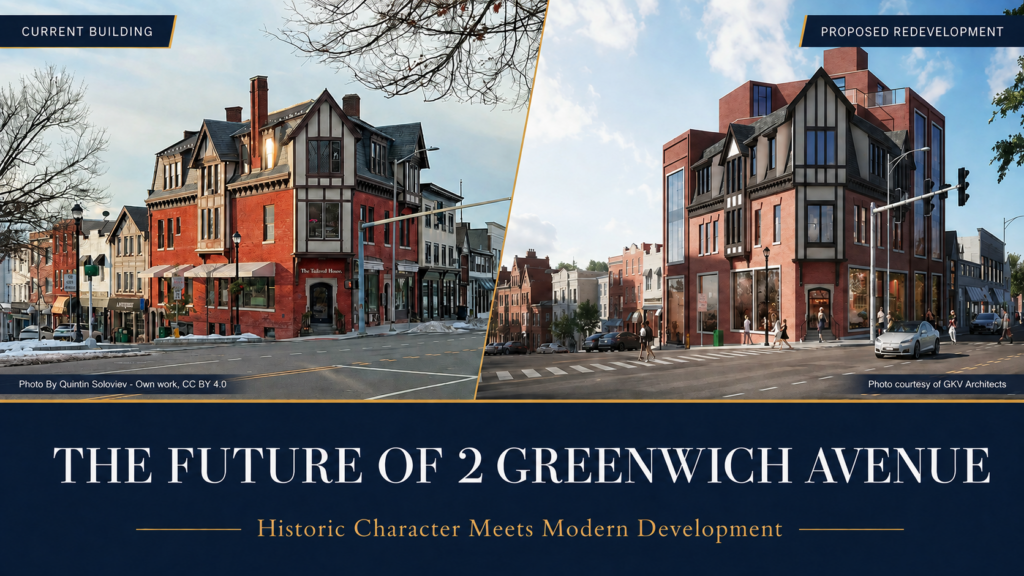
The proposed 2 Greenwich Avenue redevelopment centers on one of the buildings most closely associated with downtown Greenwich: the Tudor Revival structure prominently positioned at the intersection of Greenwich Avenue and West Putnam Avenue.
Together with its two neighboring structures, the building has helped define the entrance to one of Fairfield County’s most recognizable commercial districts for generations. Now, a proposal to demolish all three buildings and replace them with a new mixed-use development is prompting a larger conversation about historic preservation, modern functionality and the future of Greenwich Avenue.
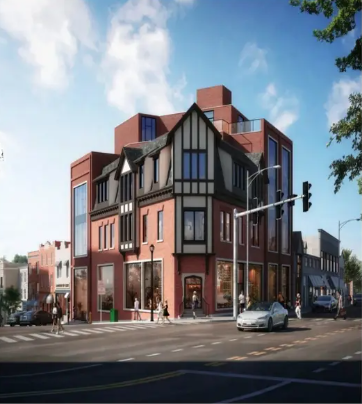
The preliminary redevelopment proposal calls for two new four-story buildings featuring ground-floor retail space and 14 residential units on the upper floors. Existing office use at the property would be eliminated.
The property owner has maintained that decades of renovations and alterations have compromised the original structures and made rehabilitation financially and practically difficult. The proposed redevelopment would introduce modern building systems, updated accessibility and fire-safety features, new housing and contemporary commercial space at one of the town’s most visible intersections.
At the same time, the possible loss of the buildings has generated substantial concern among residents, local officials and preservation advocates. The State Historic Preservation Office has become involved in reviewing the property, while Greenwich First Selectman Fred Camillo and other community leaders have called for alternatives to demolition to be thoroughly explored.
A Commercial Property With a Distinctive Identity
The discussion surrounding 2 Greenwich Avenue illustrates a consideration that can sometimes be overlooked when evaluating commercial real estate: certain buildings contribute value well beyond the boundaries of their individual parcels.
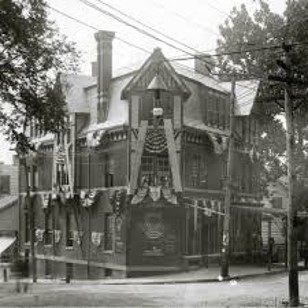
Constructed during the late 19th century, the main building is believed to have been Greenwich’s first brick commercial building. It was commissioned by prominent local businessman and Civil War veteran Isaac L. Mead and designed by architect Henry Hudson Holly. Readers interested in learning more about the building’s architectural, commercial and civic significance can review the Town of Greenwich’s detailed history and preservation assessment of the Isaac Lewis Mead Building
Over its long history, the property has accommodated an extraordinary variety of commercial, civic and community uses. Its occupants have included a funeral parlor, furniture and upholstery businesses, a post office, a bicycle shop and a Masonic lodge. During the campaign for women’s voting rights, it also served as a local headquarters for the Connecticut Woman Suffrage Association.
Today, its steep rooflines, brick exterior and exposed timber detailing make the property a visual gateway to Greenwich Avenue. Its prominent location and distinctive design also contribute to the character of the surrounding retail district.
“Commercial properties do not operate in isolation. A landmark building can help establish the identity of an entire business district and create the sense of place that attracts retailers, companies, residents and visitors,” said John Hannigan, Principal of Choyce Peterson. “At the same time, successfully repositioning an older property presents significant structural, regulatory and financial challenges. The best situation is one that carefully examines whether or not the building’s historic character can be preserved while allowing the property to remain economically viable, safe and functional for future generations.”
What Does the 2 Greenwich Avenue Redevelopment Reveal About Historic Commercial Properties?
Historic commercial properties can provide qualities that newer construction may struggle to reproduce. Distinguished architecture and an established connection to the community can help a building stand apart in a competitive leasing environment. For retailers and office tenants, occupying a recognizable property may also reinforce their brand and create a more memorable experience for clients and customers.
However, these benefits must be weighed against the realities of operating an older building.
Historic properties frequently require substantial investment to address aging mechanical systems, energy efficiency, accessibility, fire protection and compliance with modern building codes. Floor configurations created for earlier generations of businesses may also be difficult to reconcile with present-day tenant requirements.
In some cases, adaptive reuse can bridge that divide. Successful repositioning may preserve a building’s defining exterior features while introducing new systems and reconfiguring interior space for modern uses. In other situations, structural conditions and construction costs can make preservation considerably more complicated.
Determining which approach is practical requires detailed engineering, architectural and financial analysis—not simply an assessment of a building’s appearance or age.
Mixed-Use Development and the Future of Greenwich Avenue
The proposed residential component also reflects a broader commercial real estate trend occurring in downtown districts throughout Fairfield County: the introduction of additional housing near shops, restaurants, services and transportation.
New residents can generate foot traffic, support local businesses outside traditional office hours and contribute to a more active downtown environment. Mixed-use development can also help property owners respond to changing demand for older office space.
Yet context matters, particularly at a gateway property with substantial historic and architectural significance. The central question is not merely whether additional housing and modern retail space would benefit Greenwich Avenue. It is whether those goals can be achieved while preserving the character that has made the Avenue commercially successful and culturally distinctive.
The proposal remains subject to further review, including the municipal land-use process and consideration of the requested zoning relief. Preservation advocates are also continuing to seek alternatives that could retain some or all of the existing structures.
Whatever the eventual outcome, the debate surrounding 2 Greenwich Avenue offers a valuable reminder for property owners, tenants and municipal decision-makers: thoughtful commercial real estate decisions must account for both a property’s future potential and the value it already contributes to its surroundings.
At the top of Greenwich Avenue, those considerations are especially visible.
To explore the market dynamics, business districts and commercial real estate trends shaping the community, visit our Greenwich, CT commercial real estate market overview.
Note: Some background information in this article was reported by The Greenwich Time.