
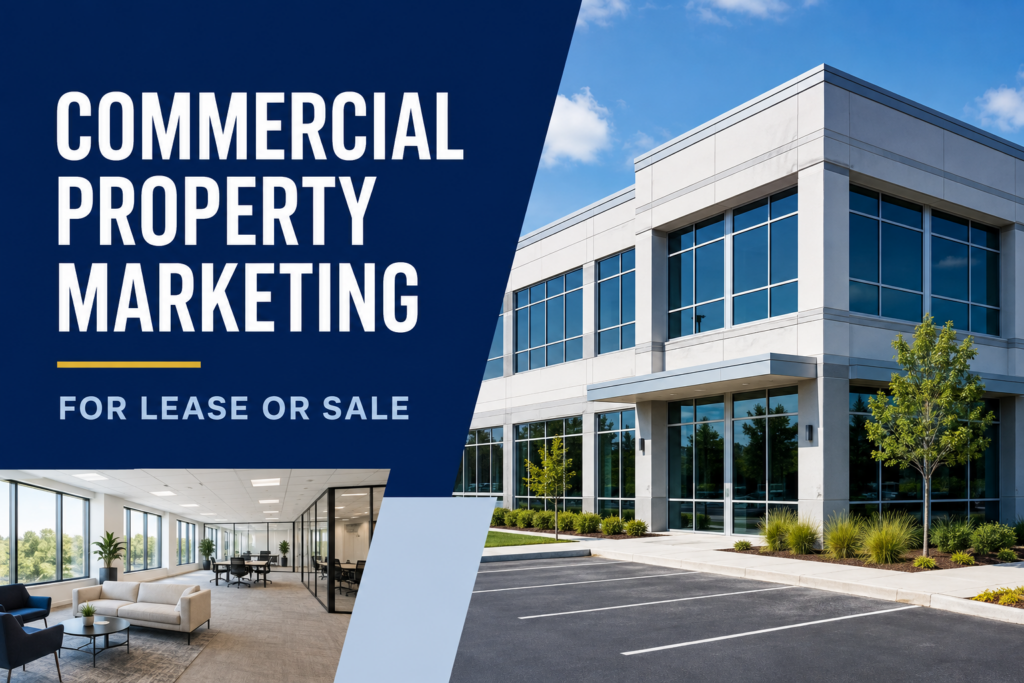
Successful commercial property marketing requires much more than installing a “For Lease” or “For Sale” sign and publishing an online listing. In competitive markets such as Fairfield County, CT, Westchester County and the Bronx, NY, owners need a coordinated strategy that prepares the property, establishes its position in the market and reaches the tenants or buyers most likely to recognize its value.
Hybrid work, evolving business needs and changes in consumer behavior have reshaped demand for office, retail and mixed-use properties. Prospective tenants and buyers are more selective, making presentation, pricing, positioning and promotion increasingly important.
Whether an owner is marketing one vacant suite or an entire building, the following steps can help the property attract attention and compete more effectively.
Evaluate the Property’s Market Position
Before bringing a commercial property to market, owners should understand how it compares with competing opportunities.
A thorough competitive analysis may consider:
- Asking rents or sale prices
- Available square footage
- Property condition and age
- Location and accessibility
- Parking availability
- Amenities and building services
- Operating expenses
- Existing improvements
- Permitted or potential uses
- Nearby competing properties
This information helps determine how the property should be priced, which features should be emphasized and what improvements may be necessary before marketing begins.
Owners should also identify the property’s most likely audience. A marketing strategy intended to attract a professional office tenant will differ from one targeting medical users, retailers, investors or owner-occupants.
Understanding that audience makes it possible to develop more relevant messaging and direct marketing efforts toward qualified prospects.
First Impressions Drive Interest
When a prospective tenant or buyer visits a property, the first impression can determine whether that person approaches the tour with enthusiasm or hesitation.
Exterior presentation is especially important. Landscaping, signage, parking areas and building entrances all contribute to how the property is perceived. Dead plants, patchy grass, faded striping or an uninviting entrance can suggest that the building has not been properly maintained, even when the property is otherwise in good condition.
Relatively simple improvements can make a substantial visual difference. Fresh mulch, trimmed greenery, seasonal plantings, updated signage and a clean entrance can improve curb appeal before a prospect enters the building.
Parking areas also deserve attention. Clean pavement, visible striping, adequate lighting and clear directional signage help make a property feel professional, accessible and well managed.
In competitive commercial real estate markets, these details can affect whether a prospect decides to explore the opportunity further.
Interior Condition Influences Leasing and Buying Decisions
Once inside, prospective tenants and buyers evaluate whether the building and available space can support their operational needs. They are also forming an opinion about how well the property is managed.
Clean, modern lobbies and common areas help establish credibility immediately. Even modest improvements—such as fresh paint, updated lighting, new carpeting or carefully selected furniture—can noticeably improve the overall presentation.
Vacant suites should be clean, well lit and free of abandoned furniture or debris. Ceiling tiles, flooring, walls, doors and window coverings should be inspected and repaired when necessary.
Mechanical rooms, utility areas and storage spaces should not be overlooked. Serious tenants and buyers may examine these areas, particularly when evaluating an older office, retail or mixed-use building.
The objective is to eliminate preventable distractions that could cause a prospect to question the condition, management or value of the property.
Targeted Property Improvements Can Deliver Strong Returns
A full-scale renovation is not always necessary to generate interest. In many cases, carefully selected improvements provide a stronger return on investment.
Fresh paint, modern lighting, clean carpeting and replacement ceiling tiles can transform a dated suite. These improvements help prospective tenants visualize the space as clean, functional and ready for occupancy.
Owners should prioritize improvements based on the property’s competitive position and intended audience. For example, an outdated office suite may benefit from refreshed finishes and a more flexible layout, while a retail property may require better storefront visibility, signage or exterior lighting.
Before committing to a major renovation, owners should consider whether prospective tenants will prefer to customize the space themselves. In some cases, offering a tenant improvement allowance or presenting several potential build-out concepts may be more effective than completing speculative improvements without market input.
Staging and Visualization Help Prospects See the Possibilities
Staging is no longer limited to residential real estate. Commercial property owners can use furnished suites, sample offices and professionally arranged common areas to help prospects understand how a space could function.
A furnished office suite makes it easier to assess room sizes, circulation and layout potential. This can be particularly helpful for smaller businesses that may not have experience evaluating or designing commercial space.
Virtual staging and architectural renderings can also illustrate potential uses without requiring the owner to complete a physical renovation. Depending on zoning, building systems and other feasibility considerations, renderings may demonstrate how a property could accommodate office, retail, medical, restaurant or other uses.
Any digitally staged image should be clearly identified as a conceptual rendering so that prospects understand which features currently exist and which represent possible improvements.
Floor plans, test fits and renderings are especially useful when an empty or outdated space makes it difficult for prospects to envision the final result.
Professional Marketing Materials Build Credibility
High-quality marketing materials help a commercial property stand out and provide prospective tenants or buyers with the information needed to evaluate the opportunity.
For example, when marketing a commercial property for lease or sale, Choyce Peterson develops a customized package designed to present the asset professionally and communicate its most marketable features. Depending on the property, this may include:
- Professional photography
- Aerial or drone imagery when appropriate
- Accurate floor plans
- Property and location maps
- An offering memorandum or leasing brochure
- Building specifications
- Available-suite information
- Parking and access details
- Nearby amenities and transportation
- Virtual tours or video walkthroughs
- Conceptual renderings or test-fit plans
Choyce Peterson uses these materials across multiple marketing channels, including commercial real estate listing platforms, targeted email campaigns, the company’s website, social media, property signage and direct outreach to prospective tenants, buyers and commercial real estate brokers.
“Effective property marketing is about more than assembling a list of facts and photographs,” said Scott Peterson, Vice President of Capital Markets at Choyce Peterson. “We identify the features that differentiate an asset, determine which prospective buyers or tenants are most likely to recognize its value and develop a strategy that presents the property to that audience as clearly and effectively as possible.”
The marketing materials should do more than list square footage and pricing. They should communicate the property’s advantages, potential uses and overall value proposition.
Messaging must also reflect the intended audience. A tenant may prioritize flexibility, operating costs, amenities and employee accessibility, while a buyer may focus more heavily on occupancy, income, expenses, redevelopment potential and long-term value. By tailoring the presentation and outreach strategy to the property and its most likely audience, Choyce Peterson helps owners position their assets more effectively in the marketplace.
Use Multiple Channels to Reach Qualified Prospects
Effective commercial property marketing combines broad visibility with targeted outreach.
Depending on the property and intended audience, a campaign may incorporate:
- Commercial real estate listing platforms
- Dedicated property pages on the brokerage firm’s website
- Email campaigns
- Direct outreach to prospective tenants or buyers
- Broker-to-broker communication
- Social media promotion
- Property signage
- Print or digital advertising
- Public relations opportunities
- Outreach to business owners, investors or professional advisors
Simply publishing a listing is rarely enough. A commercial real estate broker can identify prospective users or buyers, communicate directly with decision-makers and introduce the opportunity to other brokers whose clients may be a good fit.
Consistent exposure is also important. Marketing materials should be reviewed and refreshed as market conditions, availability or property details change.
Price and Terms Must Reflect the Market
Even a well-maintained property with professional marketing can struggle to generate interest if its pricing or terms are not competitive.
Owners should establish an asking rent or sale price based on current market conditions, comparable properties, the condition of the asset and the property’s specific advantages and limitations.
For lease opportunities, prospective tenants may also evaluate operating expenses, improvement allowances, lease flexibility, renewal options and the owner’s willingness to accommodate particular business requirements.
A property does not always need to be the least expensive option. However, the pricing and terms should make sense in relation to the alternatives available in the market.
Monitor Results and Adjust the Strategy
A commercial property marketing campaign should be actively managed after it launches.
Owners and their brokers should track:
- Listing views and inquiries
- Email engagement
- Broker responses
- Property tours
- Prospect feedback
- Proposals received
- Common objections
- Competing properties entering or leaving the market
If the property generates online attention but few tours, the listing or qualification process may need to be reviewed. If prospects tour the property but do not submit proposals, condition, pricing, layout or lease terms may be affecting the response.
Feedback from prospective tenants, buyers and cooperating brokers can help determine whether adjustments are needed. Those changes might include refreshing the photography, improving the property, revising the asking price, offering more flexible terms or repositioning the opportunity for a different audience.
How Tenant and Buyer Expectations Have Changed
Hybrid work, evolving workplace strategies and changing consumer behavior have permanently influenced demand for commercial space.
Office tenants are examining space efficiency, flexibility, amenities and employee experience more carefully. Retail tenants are evaluating visibility, traffic, accessibility and the relationship between physical locations and online sales. Buyers are considering both current property performance and the asset’s ability to adapt to future uses.
As a result, property owners need to understand what today’s tenants and buyers value—not simply what attracted prospects several years ago.
A commercial property that is prepared, priced and presented in response to current market expectations has a stronger opportunity to capture attention.
Position Your Commercial Property for the Market
Successfully marketing commercial property requires more than advertising its availability. Owners must understand the competitive market, identify the most likely audience, prepare the asset for showings and implement a coordinated campaign that communicates the property’s value.
Choyce Peterson helps commercial property owners evaluate market conditions, position their assets, reach qualified prospects and negotiate lease or sale terms. Whether you are preparing to market an office, retail or mixed-use property in Fairfield County, Westchester County or the Bronx, an informed strategy can help reduce downtime and improve the likelihood of a successful outcome.
Contact Choyce Peterson at (203) 356-9600 to discuss a customized marketing strategy for your commercial property.


